MSc Course: An MSc (Master of Science) is a 2-year postgraduate professional degree course, divided into 4 semesters. It involves subjects such as engineering, science, technology, mathematics, etc, required for working in the business, economics, and finance world. To be eligible for the MSc program, students must score above 50% mark in a bachelor’s degree, preferably a BSc degree from any recognized university. Admission to the MSc program in many private colleges is merit-based based though in government and other colleges, students will be required to pass entrance examinations like CUET PG, GATE, BHU PET, NEST, IIT JAM, and other colleges’ specific exams. There is no upper age limit set for admission to the MSc program, and English is the main mode of communication and instruction. MSc course fee in private universities like NIU is around 3 lakhs for the full program, and in government colleges, fees can range from INR 20,000 to INR 50,000 and above.
What Is The MSc Program?
MSc stands for Master of Science, which is a PG program pursued after the completion of the BSc program. It is oriented towards developing students’ analytical thinking and technical skills required in the field of science, research, and technology. Individuals who want to have advanced knowledge and want to enhance their problem-solving skills can opt for the MSc program. This program will give them varied career and research opportunities in their specialized area of work. There are many specializations that students can choose, such as MSc in mathematics, physics, science, data science, microbiology, economics, psychology, and more. After graduating with an MSc degree, students can work as chemists, investment and financial analysts, marine biologists, data scientists, and software engineers in IT, healthcare, and research sectors. Students can earn up to INR 3 to INR 15 LPA, and those with specialized skills and experience can earn around INR 20 LPA.
MSc Course Highlights
| Highlights | Details |
| Program name | MSc – Master of Science |
| Duration | Two years |
| Course Type | Postgraduate |
| Semester | Four semester |
| Age Limit | There is no age set for the MSc program. |
| Eligibility | Must have a bachelor’s degree in BSc or a related field. |
| Program Fee | Government: above INR 50,000.
Private: 3 lakhs |
| Top Colleges | IITs, AIIMS, JIPMER, University of Hyderabad, JNU, BHU, etc. |
| Specializations | MSc in AI, cybersecurity, IT, computer science, data science, electronics, robotics, etc. |
| Job Scope | Software engineer, data scientist, business analyst, medical physicist, or a professor at a university, etc. |
| Average Salary | Ranges between INR 3 to 20 LPA. |
MSc Course Eligibility
Students who have the following eligibility criteria are eligible for the Master of Science program:
- Students who have graduated with a bachelor’s degree in the Bachelor of Science program can apply for this program.
- Applicants must have scored above 50% mark in the qualifying examination from a recognized university.
- There is no specific age set for admission to the MSc program.
- Students need to be proficient in the English language as most colleges will use English as the main mode of communication/instruction.
MSc Course Duration
The standard duration for the MSc (Master of Science) degree program is generally two years for full-time programs in India. Some part-time or online programs may offer this program with an extended duration is 3-4 years. However, the duration of the program varies depending on the specific program, mode of study (online and distance), and the country.
MSc Course Admission Process 2025
Many universities have their separate official deadline for admission to the MSc program. Though Dr. B.R Ambedkar University has a last date for the postgraduate program as 13 August 2025*.
- Eligibility: Students need to check their respective university eligibility requirements. Many universities require students to have a bachelor’s degree in a BSc program with a 50% mark from any university.
- Application: Students can download the application from the university website, fill it out correctly, and submit the form before the official deadline.
- Entrance examination: Many universities accept students on a merit basis, while some may require valid scores of CUET PG, GATE, IIT JAM, DUET, BHU PET, NEST, AIIMS MSc entrance examination, etc.
- Students who qualify for the entrance examination for the MSc program may be required to undergo an interview or a counseling session conducted in some colleges.
- Documents: students need to submit their scanned copies of original documents in the specified size and format.
- Final confirmation of the admission will be done after payment of the program fee, registration fee, and successful submission of the application form before the deadline.
MSc Course Top University
There are many top universities/institutions in India offering MSc programs for 2 years. Some popular MSc university in India is listed below:
| University name | State |
| Jamia Millia Islamia (JMI) | Delhi |
| Banaras Hindu University (BHU) | Uttar pradesh |
| Delhi University (DU) | Delhi |
| Jawaharlal Nehru University (JNU) | Delhi |
| Loyola College | Chennai |
| University of Hyderabad (UoH) | Telangana |
| St. Xavier’s College | Mumbai |
| Madras Christian College (MCC) | Chennai |
| Hansraj College, Delhi | Delhi |
| Miranda House | Delhi |
MSc Course Specialization
Students pursuing the MSc program can choose any specialization available, like:
- MSc in data science
- MSc in biotechnology
- MSc in Zoology
- MSc in environmental science
- MSc in economics
- MSc in nursing
- MSc in microbiology
- MSc in psychology
- MSc in biochemistry
- MSc in food technology
MSc Course Syllabus
Students can look at the University of Delhi MSc in mathematics syllabus given below:
| First semester | Second semester |
| MMATH18-101- Field Theory | MMATH18-201 – Module Theory |
| MMATH18-102 – Complex Analysis | MMATH18-202 – Introduction to Topology |
| MMATH18-103 – Measure & Integration | MMATH18-203 – Functional Analysis |
| MMATH18-104 – Differential Equations | MMATH18-204 – Fluid Dynamics |
| Third semester | Fourth semester |
| MMATH18-301- Any course out of the following:
(i) Algebraic Topology (ii) Commutative Algebra (iii) Representation of Finite Groups |
MMATH18-401 – Any course out of the following:
(i) Advanced Group Theory (ii) Algebraic Number Theory (iii) Simplicial Homology Theory (iv) Theory of Non-commutative Rings |
| MMATH18-302 – Any course out of the following:
(i) Fourier Analysis (ii) Matrix Analysis (iii) Theory of Bounded Operators |
MMATH18-402 – Any course out of the following:
(i) Abstract Harmonic Analysis (ii) Frames and Wavelets (iii) Operators on Hardy-Hilbert Spaces (iv) Theory of Unbounded Operators |
| MMATH18-303 – Any course out of the following:
(i) Advanced Complex Analysis (ii) Advanced Measure Theory (iii) General Topology |
MMATH18-403 – Any course out of the following:
(i) Calculus on Rn (ii) Differential Geometry (iii) Topological Dynamics |
| MMATH18-304 – Any course out of the following:
(i) Computational Fluid Dynamics (ii) Computational Methods for ODE (iii) Mathematical Programming (iv) Methods of Applied Mathematics |
MMATH18-404 – Any course out of the following:
(i) Advanced Fluid Dynamics (ii) Computational Methods for PDE (iii) Dynamical Systems (iv) Optimization Techniques and Control Theory |
| MMATH18-305 (Open Elective) – Any course out of the following:
(i) Coding Theory (ii) Stochastic Calculus for Finance |
MMATH18-404 (Open Elective) – Any course out of the following:
(i) Cryptography (ii) Support Vector Machines |
MSc Course Career Opportunities
There are many career opportunities after completing an MSc program that allow students to venture into their desired sector, like as research, technology, healthcare, finance, and more. Individuals can work as:
- Clinical psychologist: Students who have done their BSc in psychology can pursue higher studies in MSc in psychology. This will allow individuals to work as psychologists in hospitals, clinics, or institutions where the demand is high.
- Individuals who have done an MSc in data science can work as data scientists in any IT industry where they will be required to extract the required information from a large database with the help of the right technique to make a smart choice or a decision for the organization.
- Those who have done their MSc in economics can work as economists, making reports, analyzing data, and providing correct solutions, or individuals can become professors in universities and institutions and teach economic subjects.
- Individuals with an MSc in nursing can work in private and government hospitals and clinics as paediatric nurse practitioners, critical care nurse practitioners, certified midwife nurses, psychiatric nurses, etc.
Frequently Asked Questions
Q1: What is the MSc admission 2025 last date to apply?
Ans: MSc admissions last date is different for each university. The expected last date for Dr. B.R Ambedkar University is 13 August 2025*.
Q2: Which MSc course is best for the future?
Ans: Many popular MSc specializations are best for future endeavors, such as M.Sc. in data science, computer science, health management, artificial intelligence, cybersecurity, environmental science, biotechnology, etc.
Q3: How much is the MSc course fee?
Ans: The MSc course is different for all colleges. Private MSc course fee will be around 3 lakhs, and in government colleges, it will range between INR 20,000 to INR 50,000.
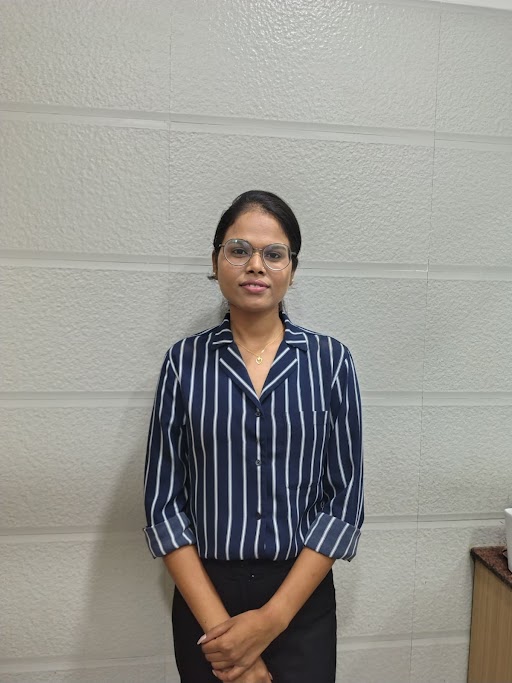
I am Pooja Gautam, an SEO Intern. I am passionate about improving website visibility through effective On-Page SEO techniques. Currently working on Keyword Research, Meta Tags, Internal Linking, and Content Optimization, so that the website grows organically.